SYSTEM
OUR SERVICE
Over sixteen years we have built a great many systems. Because most of them are internal to our clients' businesses, we cannot show them. What we can describe is the kind of system we are asked for most often, and — the question we get asked more than any other — how a project actually proceeds from first conversation to handover.
ERP
Core business system
Enterprise Resource Planning
Brings sales, inventory, production and accounting into one place, so that work and numbers can be followed across departments instead of stopping at each one.
MES
Production control
Manufacturing Execution System
Covers the plan, the actual output, progress and quality. The shop floor becomes visible as it happens, which is where waste and delay start showing up early enough to fix.
OMS
Order management
Order Management System
Quotation through order, shipping and invoicing in one flow. No double entry, no transcription errors, and everyone can see where a job has got to.
TMS
Trading management
Trade Management System
Handles both the buying and the selling side, so cost and margin are known per transaction — including the calculations that change with market price and volume.
IMS
Inventory management
Inventory Management System
Tracks goods in, goods out and stock on hand in real time. Less time lost to stocktaking, fewer stockouts, and less cash tied up in overstock.
CRM
Customer management
Customer Relationship Management
Keeps customer details, opportunities and correspondence in one shared record, so that knowledge does not live only in one person's head.
We have also built business intelligence systems, automated web data collection, LINE WORKS integrations and much else besides.
We can build AI into a system, take on PLC ladder programming and analysis for factory equipment, and handle IoT development and factory monitoring.
DEVELOPMENT PROCESS
Development Preparation
We come to you where that is practical, and meet online where it is not. The purpose of the first conversation is to understand two things properly: what is causing you trouble today, and what you would like to be true instead.
While we walk through how the work currently flows, we also look for the parts that AI could take over — generative AI, AI-OCR and so on — and propose the combination of system and AI that fits, rather than assuming either one is the answer.

Contracts & UI Design
We pick out what can realistically be delivered, write a short requirements document, and submit a quotation. Once you are satisfied with it, we sign a development contract.
Then we design the screens, with usability at the front of our minds. We use design tools and AI to get something concrete in front of you early, and review it with you as we go — which is usually the point at which the whole system stops being abstract.
Development Kickoff
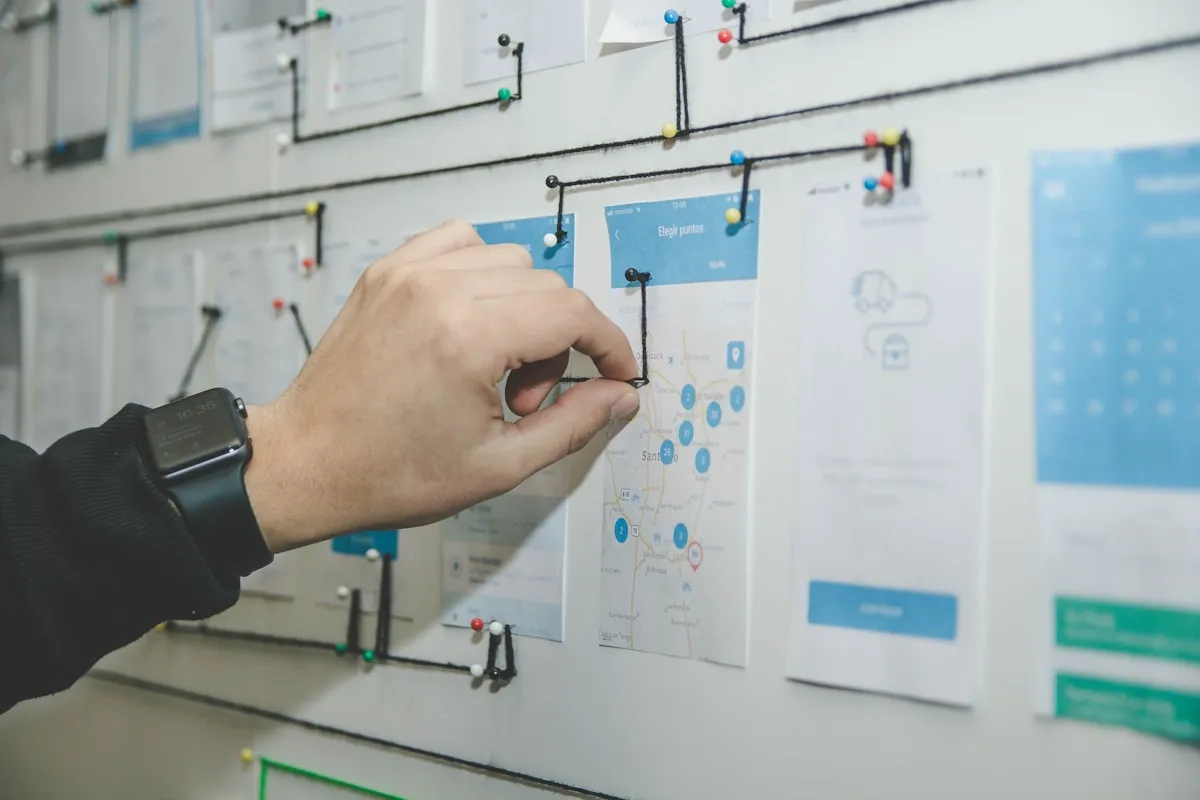
Working from the UI specification, we decide what data is genuinely needed and how it should be structured, and write that up as the database and function specification. If AI features such as a chatbot or demand forecasting are part of the plan, this is also where we organise the data they will learn from or refer to — we may need your help gathering it.
With the specifications settled, we build the screens, the database and the server environment, and write the functionality. We use AI heavily in our own development work, which is part of how we keep both speed and quality up.
Which specification documents are produced varies from project to project.

Validation & Delivery
When the build is complete we test it, using AI to widen the range of cases we check, and write the operating manual alongside. Once testing is done we install the system on your devices and walk your people through it. When it runs without trouble, we hand it over with a completion report.
There is then a verification period during which you use the system yourselves. Anything that turns out to be a defect we fix as quickly as we can. Changes to the agreed specification are quoted separately.
Operation & Maintenance
After the verification period the system goes into daily use. Clients on a maintenance agreement get defect resolution plus support for database backup and restore. Where AI features are in place, we also keep working with you on answer quality and on making better use of the data you are accumulating.
A maintenance agreement is separate from the development contract, as is any later work to extend the system.
That is how a typical project runs. For a system of ordinary scope, expect three to five months. Enquiries have been increasing, and when projects overlap we sometimes have to decline — so if you are considering something, it is worth talking to us early. The first conversation costs nothing.
Apps for phones and tablets, too
If you are thinking about an app for the public, talk to us. We can release on both Android and iOS. Some years ago we also localised and released an iOS app of our own.

If you want the same internal app on both computers and phones, we usually recommend a web application (PWA), because updates reach everyone instantly. Where a native internal app is genuinely what you need, we build for Android and iOS as well.
A system is what gives AI something to work with
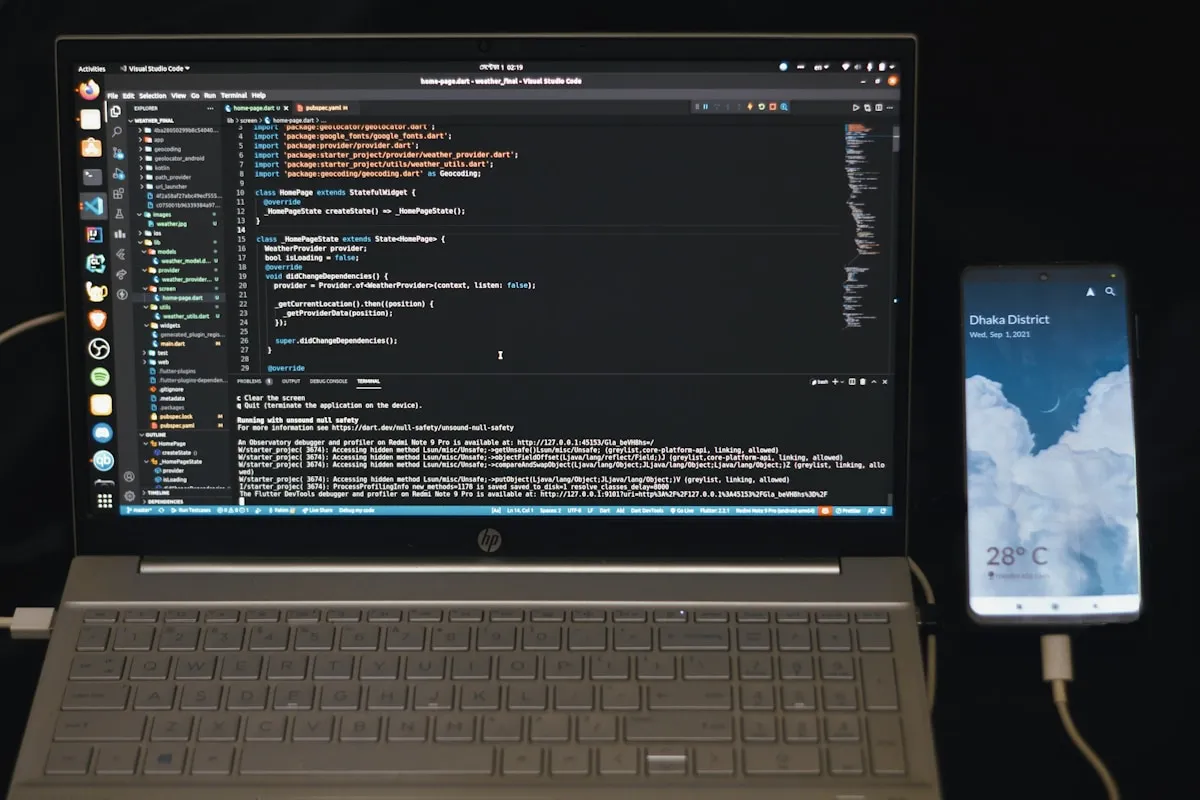
When someone tells us they want to adopt AI, the first thing we ask is where the data currently sits and what shape it is in. AI has nothing to work from unless something has been recording it. A system that captures the day's work properly is what allows AI to give a meaningful answer — and if you already have one, that data is an asset waiting to be used.
Orders, production, stock, correspondence history — once those live in a system, they become the material a forecast or a chatbot can learn from. Scattered across paper and spreadsheets, they cannot be handed to AI at all. Building the path the data travels looks like a detour and is in fact the shortest route.
AI can be part of the system from day one. Capturing forms automatically with AI-OCR, forecasting demand from accumulated data, answering questions about internal procedures with a chatbot — each of these can simply be a feature of the business system rather than a separate product.
You can equally start with the system alone and add AI once there is data worth learning from. Get the work running first, see where the value is, then extend. It spreads the investment and it is markedly harder to get wrong.
When the system and the AI come from two different suppliers, a lot of time goes into handing data between them and agreeing who is responsible for what. We do both, so we can design the data structure from the outset with what the AI will need in mind.
Frequently asked questions
How long does a system take to build, and what does it cost?
It depends on scope, but a typical system takes three to five months. Quotations are free. If the budget is tight, we can propose a phased plan that builds the most valuable part first.
We are not in Japan. Can you still work with us?
Yes. We work remotely across Japan and with clients overseas. Meetings can be held online, and written correspondence in English is welcome. Please note that our working hours are Japan Standard Time (UTC+9).
Can we ask for something small?
Yes. Automating a spreadsheet routine, or a small tool for one department, is a perfectly normal request. Starting small, confirming it helps, then widening the scope is a sensible way to work and one we often recommend.
Can you modify an existing system, or take over one built by another company?
We can. We first look at how the current system is built, then set out the scope of the change and a quotation. If no documentation survives, we can start from investigating what the system actually does. If you are thinking about adding AI to it, see AI development as well.