LADDER
OUR SERVICE
Machine builders, control panel makers and factory maintenance teams keep coming to us with the same shortage of ladder engineers. CODECRAFT takes on both contract ladder development and the analysis and documentation of ladder programs that have become a black box. Send us the specification and the ladder data and the work can be done remotely, wherever you are. One-off jobs are welcome.
Contract ladder development — what we take on
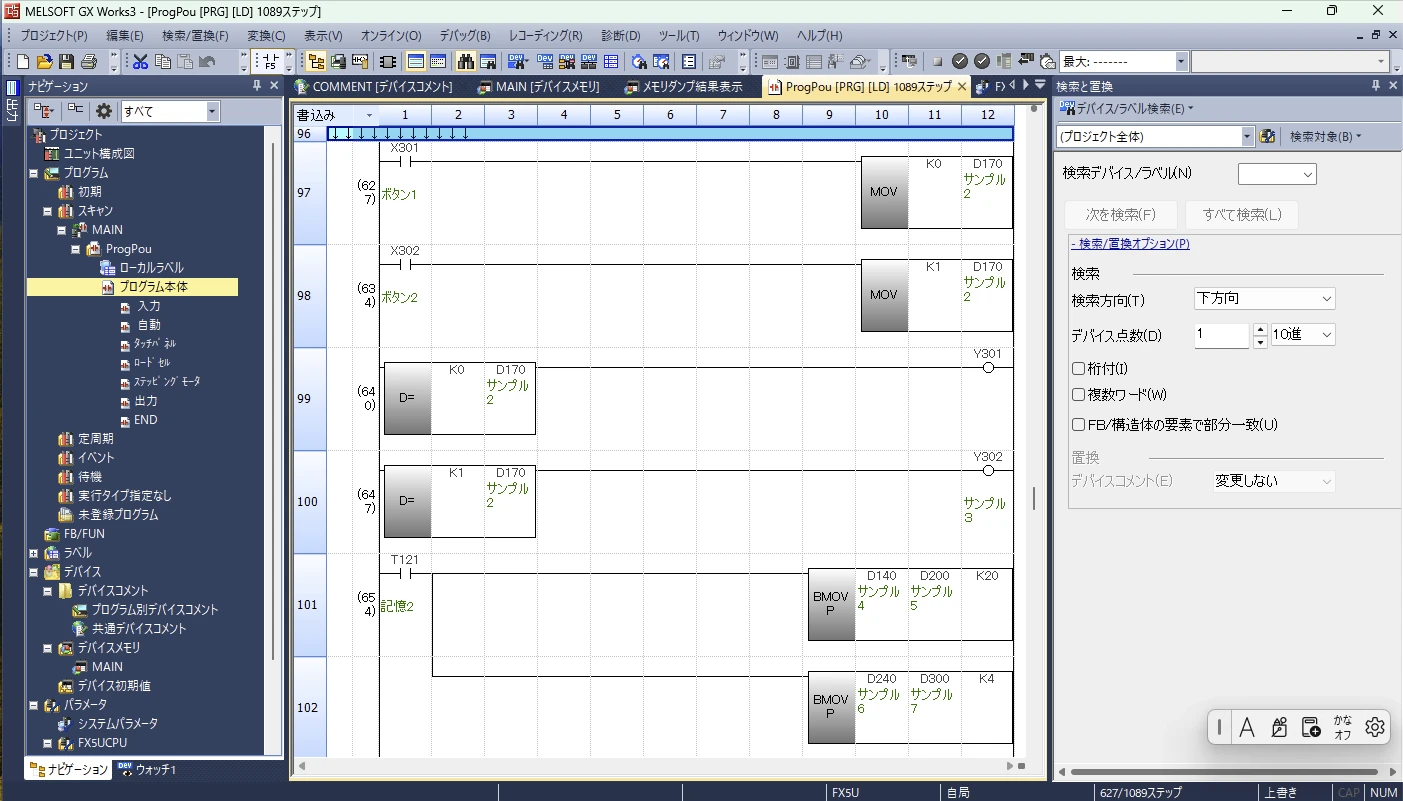
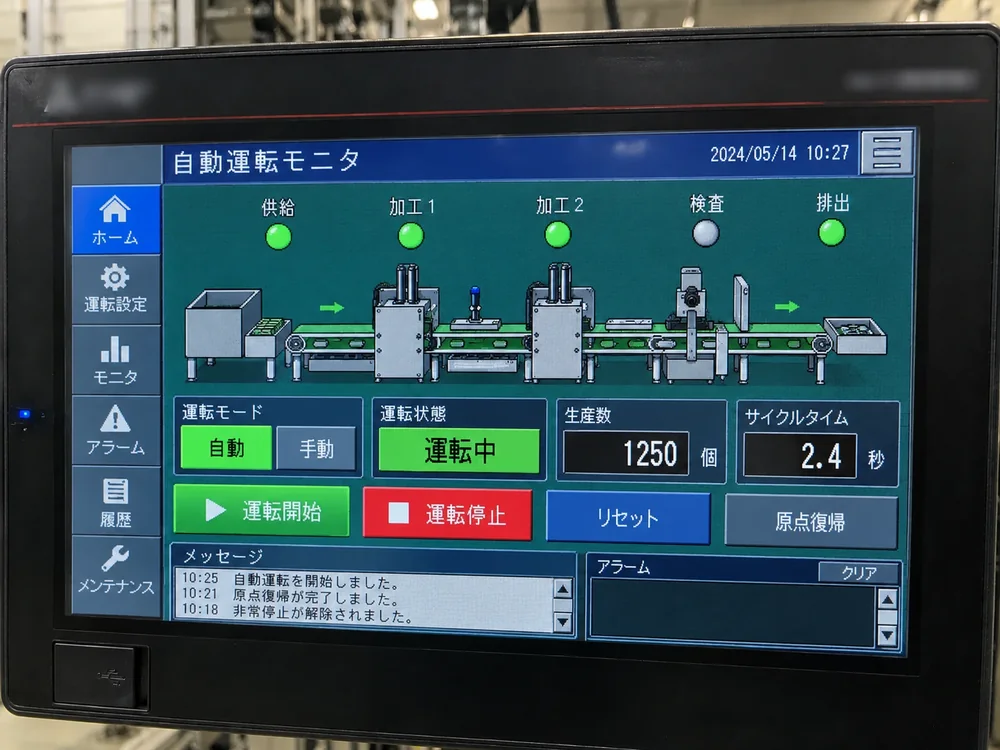
Above: the development environment (Mitsubishi Electric MELSOFT GX Works3). Below: an operating screen we built for a touch panel. Client programs and screens cannot be published, so both are samples.
When people call us
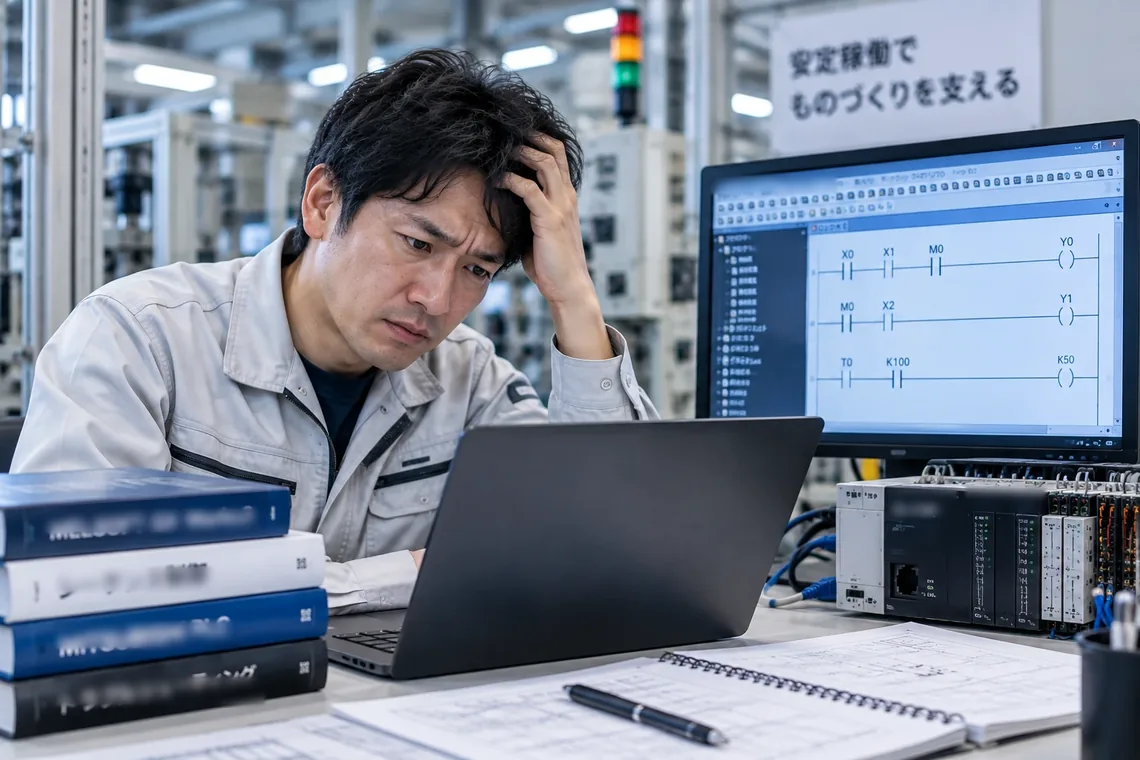
Too many jobs at once, and the in-house ladder engineer cannot get to all of them.
What we doWe take the overflow as a one-off job. Send the specification and we carry it through design and implementation.
The person who wrote ladder has left, and now the machine cannot be modified.
What we doWe start by analysing the existing program, and once we understand it we carry on into the modification or the new feature.
We would rather hand over the touch panel screens as well and have it all done together.
What we doWe design the ladder and the HMI screens together, propose a screen layout built around how it will be used, and can write the operating manual too.
Reading a program back into documentation
Is there anyone who can explain what the control program on that machine actually does? Where years of modification have turned a PLC program into a black box, we decode it and turn it into material that anyone can read. We use AI to make the analysis faster, which keeps both the timescale and the cost down. Analysis and documentation on their own are very welcome as a job.
We have done this on a machine with almost no surviving design documents, reconstructing the control from how the equipment behaved and from what the people who had run it for years remembered, and writing it out as ladder. It was not a job of reading a specification; it was picking up one movement at a time. That ability to reconstruct behaviour is the same skill we use for analysis and for modification, and it sits at the centre of what we do.
The company that built the equipment has closed, and nobody understands what is inside the panel.
Solved by analysisWe read the program out of the PLC and decode the behaviour step by step, until what the equipment does today can be stated precisely.
No specification, no comments — every breakdown starts with an investigation, so recovery drags.
Solved by analysisWe produce the operation specification, I/O map and flowchart, so that when something stops, where to look is immediately obvious.
After years of changes, nobody can describe exactly what the machine currently does.
Solved by analysisThe findings go back in as a commented ladder program. Knowledge that depended on one experienced person becomes something the company owns.
What you receive
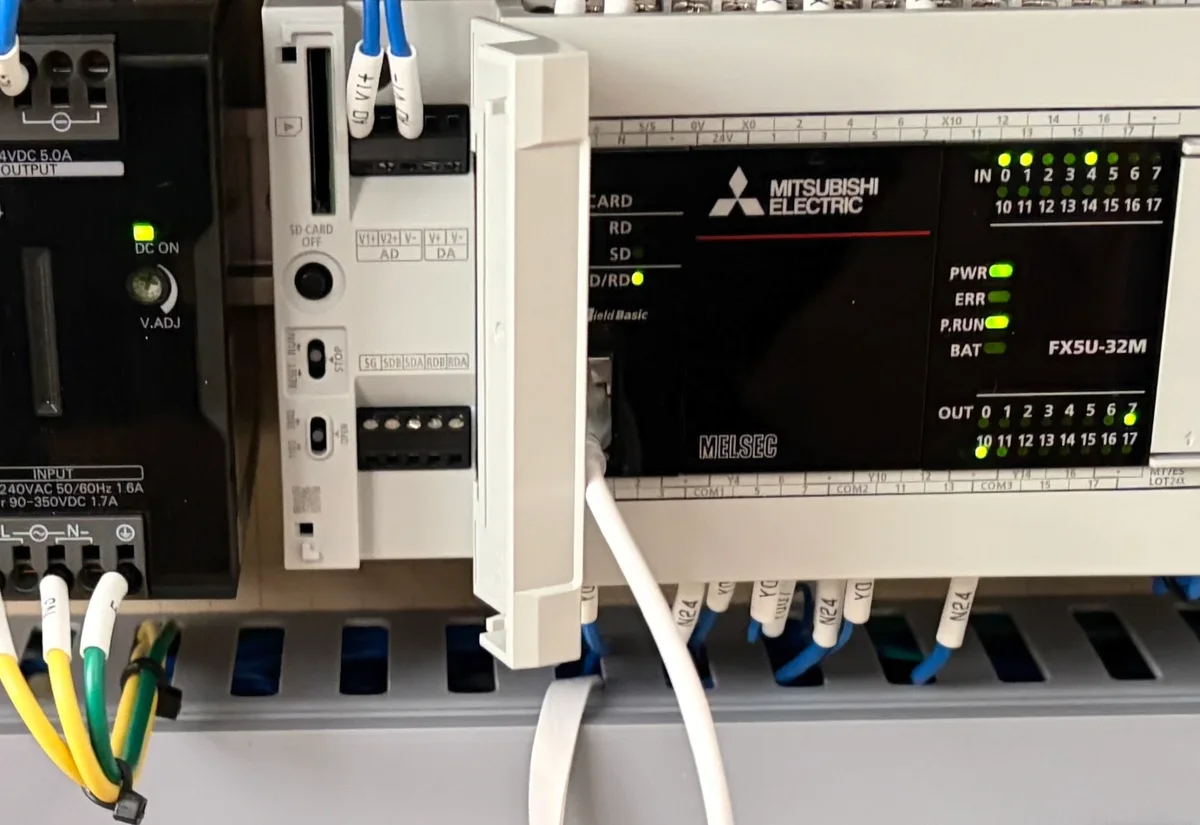
Mitsubishi Electric PLCs (GX Works3, FX5U and similar) primarily. Ask us about other makers.
Why bring this work to CODECRAFT
AI-POWERED
We use AI heavily in analysis and documentation. Work that would take a long time by hand gets done faster, which keeps the timescale and the cost down — while an engineer still signs off the final quality.
READABLE DOCS
Software development taught us to write things so they can be read and maintained. What we produce is meant for your maintenance staff, not only for specialists.
REMOTE BY DEFAULT
Because analysis normally runs from supplied ladder data, we can work from Miyakonojo for clients anywhere — with no travel cost attached.
CONFIDENTIAL
We work under an NDA. Programs and drawings are handled strictly, and where we mention work publicly the client name and specification detail stay out of it.
PROCESS
Consultation
We talk through the behaviour you need, online, and you send whatever exists — specification, timing charts, drawings. It is fine to come to us before the specification is settled. This first stage costs nothing.
Estimate
From what you have sent, we define the scope of work and present a delivery date and a quotation. We start only once you are satisfied with both.
Development & Delivery
We write the ladder, verify the behaviour in simulation, and deliver the ladder data together with the documentation. We support checks on the real machine online as well. Defect fixes and later additions continue after handover.
Frequently asked questions
Can we outsource just the ladder programming?
Yes. Ladder development on its own is a normal request for us. Send the specification and timing charts and we will design and implement from those. One-off jobs are welcome.
Can you modify or extend our existing ladder program?
We can. We follow the conventions of the existing program when adding to it, so that your own engineers can read the result without it feeling foreign. If nobody is sure what the existing ladder does, we can start from analysis.
The company that built our equipment has closed and nobody knows what is in the panel. Can you do analysis only?
Yes, and analysis-only work is very welcome. We read the program out of the PLC and decode the behaviour one step at a time, until what the equipment is actually doing today can be stated precisely.
What do we receive from an analysis job?
An operation specification, an I/O map and wiring correspondence table, a process flowchart, and a commented ladder program. We can also add a written assessment of ageing risk with recommendations for what to do next.
We are not nearby. Do you need to visit the site?
Not normally. If you can send specifications, ladder data and drawings, the work can be done remotely and meetings held online. If you would prefer us on site we are glad to come; travel costs are charged, and for locations outside Japan those need to be discussed in advance.
Which PLC makers do you work with?
Mitsubishi Electric PLCs primarily, including GX Works3 and the FX5U family. Ask us about other makers — we will tell you honestly whether it is within our range.
Can you work on a machine with no surviving drawings or documentation?
Yes. With older machines, no surviving documentation is the normal case rather than the exception. We reconstruct what happens, and in what order, from the machine itself and from the memory of the people who have run it for years. That reconstruction is the most important stage of the whole job — done carefully it removes most of the rework later. We will not turn a job down because the paperwork is missing.
Can you also replace an obsolete PLC with a current model?
Yes, where the replacement is PLC to PLC. Instructions and communication settings that conversion tools cannot carry over are rewritten by hand, and we verify the result in simulation before handing it over. We take the program migration, verification and commissioning support; panel and wiring work is normally shared with your local contractor.
We are uneasy about handing over our program. Will it stay confidential?
We work under an NDA. Programs and drawings you entrust to us are handled strictly, and where we mention work publicly we withhold the client name and any specification detail.
Related: IoT development and factory monitoring/custom system development/AI development